Barracuda Load Balancer T740 FDC
Server Load Balancing up to 40Gbps at Disruptive Economics

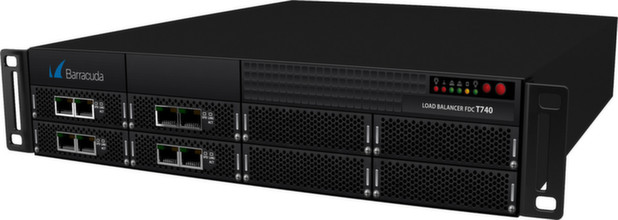
Sorry, this product is no longer available, Contact Us for a replacement.
 Barracuda Load Balancer FDC Overview:
Modern data centers need fast and efficient load balancing of server traffic in the physical layer, where it can be handled more efficiently before it enters the application virtualization layer. The Barracuda Load Balancer FDC leverages open technologies to avoid high cost, custom hardware to provide industry leading performance cost efficiently.
The Barracuda Advantage
- High-performance platform designed for data centers
- Purpose-built for high throughput application delivery networks
- Simple and Intuitive web-based administration
- Backed by our live 24x7 customer support experts
Product Spotlight
- 40 Gbps throughput
- Fast load balancing for TCP and UDP traffic
- Part of Application Delivery Networking, which is a next generation data center architecture
AvailabilityUsing health and performance checks, the Barracuda Load Balancer FDC distributes traffic for efficient use of server resources. It employs advanced technologies for monitoring server and application health to reattribute traffic, ensuring optimal utilization of resources. |
|
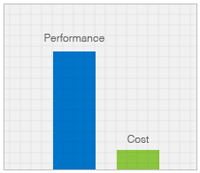
PerformanceLeveraging modern and open technologies for packet processing, and without custom hardware modules, Barracuda Load Balancer FDC delivers high throughput load balancing at an industry leading price. |
High Throughput Load Balancing for Today’s Application Delivery Architectures
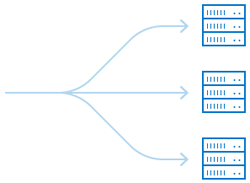
The Barracuda Load Balancer FDC provides a fast distribution tier for server load balancing in front of the virtual data center or physical data center. The Barracuda Load Balancer FDC can either distribute traffic directly across clusters of backend application servers, or be used in conjunction the Barracuda SSL VPN Vx or Barracuda Web Filter Vx for complete application delivery functionality. Supporting up to 40Gbps throughput and up to 10 million concurrent connections, the Barracuda Load Balancer FDC is capable of supporting thousands of backend servers for high throughput Layer 4 load balancing — all at disruptive pricing.
Using Intel's world-class DPDK technology, Barracuda Networks has developed the Barracuda Load Balancer FDC, designed to give organizations full control of their network environments. Barracuda Load Balancer FDC is ideal for virtualized data centers. It provides scalability and high availability for websites and cloud services by monitoring the health of servers and evenly distributing server loads – all while maintaining session persistence and providing a seamless user experience if ever one or more servers become overburdened or unresponsive.
The Barracuda FDC allows organizations to decouple the application access control and application security from the front-end device, enabling the front-end device is solely focused on network traffic distribution. This allows the application to have access control and the application security to live closer to the application in the virtual environment.
Application Delivery Networking
Application Delivery Networking is an architectural vision designed to efficiently deliver and secure applications in the modern data center. A next generation firewall provides security and remote access. Then traffic is processed and load balanced efficiently in the physical layer first without the penalty of virtualization. Finally, applications are secured with a Web Application Firewall that co-resides with the application.
Benefits:
|
|
|
|
|
 Session Persistence for a Positive User Experience
Features:
Scalability
The Barracuda Load Balancer FDC (Fast Distribution Controller) scales the performance of both physical and virtual data centers by providing a fast distribution tier for server load balancing, distributing requests across multiple servers within a cluster. The Barracuda Load Balancer FDC supports up to thousands of backend servers.
Designed to be used in conjunction with the Barracuda Web Application Firewall or the Barracuda SSL VPN, the Barracuda Load Balancer FDC is also a core component of a high throughput application delivery network (ADN) architecture.
High availability
Barracuda Load Balancer FDC provides high availability by automatically detecting the failure of a server and repartitioning client traffic among the remaining servers within seconds, while providing users with continuous service.
L4 Load Balancing
The Barracuda FDC can be deployed as a hardware or virtual appliance and can intelligently load balance hardware or virtual servers running on Layer 4 protocols. These include SSH, SMTP, IMAP, POP3, NNTP, ASP, DNS, LDAP, RADIUS, TFTP, and RDP.
Additionally, it supports both IPv6 and IPv4 load balancing and can operate in full IPv6 or IPv4 networks, as well as mixed environments where an address translation is needed to bridge the IPv6 and IPv4 networks.
Intelligent Server Monitors
Intelligent traffic monitoring capabilities enable the Barracuda Load Balancer FDC to distribute traffic efficiently while ensuring high application availability. It monitors server health to determine that application servers are not only reachable, but alive. If the Barracuda Load Balancer FDC detects issues, it automatically removes downed servers from the server pool and rebalances traffic among the remaining servers. It has the ability to group servers in the application groups so that if a server in a group fails, it can automatically failover all traffic to the remaining application groups.
IPv4/IPv6
The Barracuda Load Balancer FDC has complete support for IPv4 and IPv6 based traffic. The Barracuda Load Balancer FDC is optimal for organizations looking for IPv4 to IPv6 migration strategy. It allows enterprise applications to exist in both IPv4 and IPv6 networks simultaneously. Customers and users can access the application and website regardless of the network protocol they are using.
There is no need to migrate applications to newer versions or servers in order to publish them on IPv6 networks. The Barracuda Load Balancer FDC can do IPv6 to IPv4 translations allowing legacy applications that only support IPv4, and can still be published on newer IPv6 networks.
Adaptive Load Balancing
Barracuda Load Balancer FDC can adapt to changing load conditions on the applications and servers, as well as redistribute traffic based on the current patterns. By measuring various metrics like CPU load via SNMP, or directly querying the application to find current application-specific load, the Barracuda Load Balancer FDC knows which servers to send traffic to. Adaptive Load Balancing is used in place of non-dynamic load balancing algorithms likes round-robin or least connections. Those algorithms do not react to the constant change in application load while applications might be busy performing a computation or waiting on a database for a query to return.
Specifications:
| Model | T740 |
|---|---|
| Capacity | |
| Maximum Throughput | 40 Gbps |
| Concurrent Sessions | 10 Million |
| Connections/Second | 750,000 |
| Hardware | |
| Rackmount Chassis | 2U Fullsize |
| Dimensions (in.) | 17.4 x 3.5 x 25.5 |
| Weight (lbs.) | 46 |
| Copper Ethernet NICs | 8 x 10 Gigabit Ethernet |
| Input Current | 3.6 |
| Features | |
| Layer 4 Load Balancing | |
| Direct Server Return | |
| High Availability | |
| IPv4/IPv6 Support | |
Technical Specs

Availability
- Layer 4 & Layer 7 load balancing
- IPv6/IPv4 support
- Active/passive high availability
- Default load balancing
– Round robin
– Weighted round robin
– Least connection - Adaptive load balancing by CPU load, URL load balancing
- IP-based persistance
- Server health check and monitoring

Network Security
- Layer 4 ACLs
- VLANs
- NATs

Supported Protocols
- HTTP/S
- SSH
- SMTP
- IMAP
- POP3
- NNTP
- ASP
- DNS
- LDAP
- RADIUS
- TFTP
- RDP
- Windows Terminal Services
- Any TCP/UDP application
Support Options

Barracuda Energize Updates
- Firmware updates
- Application Security updates
- Standard technical support

Instant Replacement Service
- Replacement unit shipped next business day
- 24x7 technical support
- Hardware refresh every four years
Management Features
- Real-time traffic statistics
- Web-based management
Views:
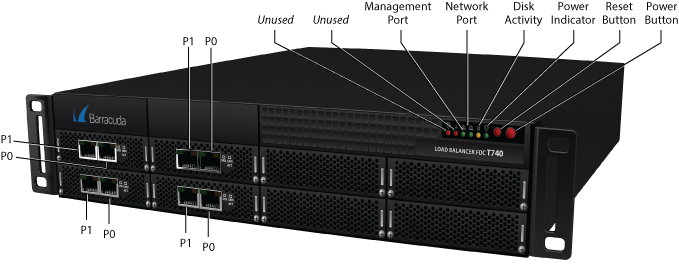
Front Panel
The following figure illustrates the Barracuda Load Balancer FDC power and disk activity indicator lights for models T740:
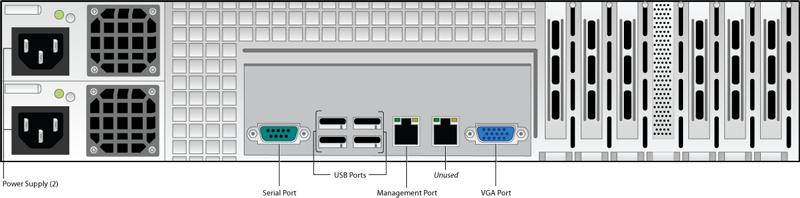
Rear Panel Ports and Connectors
The following figure illustrates the Barracuda Load Balancer FDC rear panel ports and connectors for models T740:
Deployment:
When you deploy the Barracuda Load Balancer FDC, ensure that your network meets the setup requirements. You must also decide on:
- Deploying the Barracuda Load Balancer FDC in either a one-armed or two-armed mode.
- Creating virtual services to load balance traffic. A virtual service is a combination of an IP address and one or more TCP/UDP ports. Traffic arriving at the designated ports for the specified IP address is directed to one of the servers that are associated with that particular service.
- Configuring Direct Server Return (DSR) for servers that generate more outbound traffic than inbound traffic.
- Setting up two Barracuda Load Balancer FDCs in a high availability cluster as an active-passive pair. Only the active unit processes traffic, but both units synchronize their configurations and monitor each other's health.
One-Armed Using a TCP or UDP Virtual Service
A one-armed topology has either all of the servers and the VIP addresses on the WAN or (less commonly) all of the servers and the VIP addresses on the LAN.
For TCP or UDP virtual services, you must configure the servers in Direct Server Return mode.
Two-Armed with Layer 4 Load Balancing
Use this option to provide Layer 4 load balancing of TCP or UDP traffic with the Barracuda Load Balancer FDC.
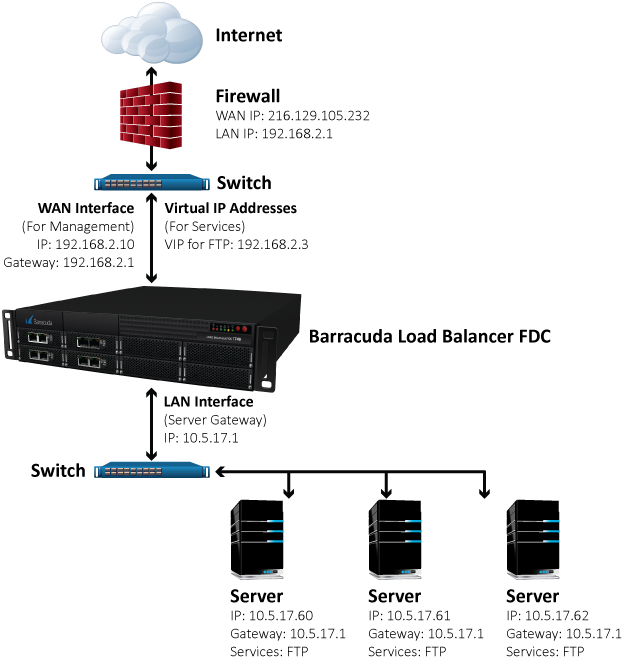
Deploying the Barracuda Load Balancer FDC in a two-armed configuration provides greater performance but requires you to change the IP addresses of all your servers. If a Layer 4 type of service is used, you must set the Barracuda Load Balancer FDC as the default gateway for all downstream servers so that the Barracuda Load Balancer FDC can handle the responses that are issued by these servers to client requests.
Figure 1. Two-armed Route-Path network with Layer 4 services.
Barracuda Load Balancer FAQ:
The Barracuda Load Balancer FDC is a high throughput, Layer 4 load balancer device capable of balancing traffic at up to 40 Gbps throughput. Application security can be provided by the Barracuda Web Application Firewall.
The Barracuda Load Balancer FDC supports thousands of servers.
Servers can be added in one step through the Barracuda Load Balancer FDC's web UI.
The Barracuda Load Balancer FDC works with any TCP/UDP service or application.
Direct Server Return is a load balancing mode unique to Barracuda Networks that manages low-bandwidth requests through the load balancer, but delivers high-bandwidth responses directly to clients without routing back through the load balancer.
The Barracuda Load Balancer FDC is built on standard Intel architecture components. The Barracuda Load Balancer FDC utilizes a software-based data path stack built on top of DPDK (see dpdk.org), enabling high throughput without the need for specialized hardware.
Documentation:
Download the Barracuda Load Balancer FDC Datasheet (.PDF)